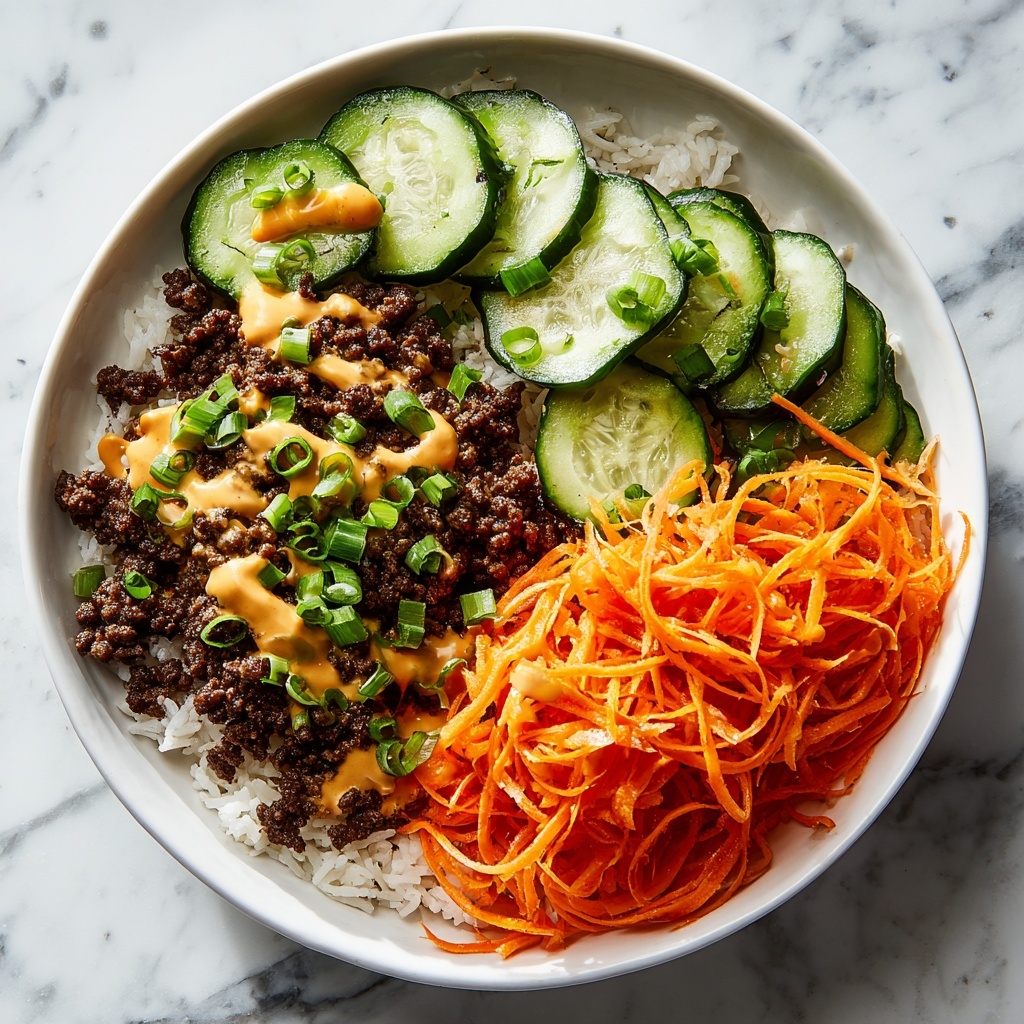
If you’ve ever craved a meal that’s bursting with bold flavors, satisfying textures, and comes together in a snap, you’re in for a treat. This Korean Beef Rice Bowls Recipe is a brilliant combo of savory, sweet, and spicy elements all piled high on fluffy jasmine rice. It’s the kind of dish that feels like a warm hug from the inside out, perfect for weeknight dinners or impressing friends with minimal fuss. Trust me, once you make this, it’ll quickly become one of your go-to recipes for busy days that still deserve something special.
Ingredients You’ll Need
Simple ingredients can create magic in the kitchen, and this Korean Beef Rice Bowls Recipe uses just the right essentials to layer amazing flavors and textures. Each one brings something unique, whether it’s the zing of fresh ginger or the creamy kick of gochujang mayo.
- Freshly grated garlic (1 tsp): Adds a fragrant, aromatic base to the beef mixture.
- Freshly grated ginger (1 tsp): Offers a bright, slightly peppery note that cuts through the richness.
- All-purpose soy sauce (3 tbsp): Provides a salty, umami depth that’s essential.
- Brown sugar (2 tbsp): Balances savory with a caramel sweetness for perfect harmony.
- Sesame oil (1 tbsp + ½ tsp): Delivers a nutty fragrance, making the dish irresistibly aromatic.
- Gochujang (1 tbsp + 1 tsp): A spicy Korean chili paste that builds layers of warming heat and tang.
- Rice vinegar (1 tsp + ½ tsp): Brightens up the flavors with a subtle acidity.
- Sesame seeds (1 tbsp plus extra to garnish): Adds a toasty crunch and visual appeal.
- Extra-virgin olive oil or neutral oil (2 tbsp): Perfect for sautéing the beef without overpowering the flavors.
- Minced (ground) beef (500g / 1 lb 2 oz): The hearty, savory protein star of this bowl.
- Spring onions/scallions (2, finely sliced): Bring fresh brightness and a mild onion crunch.
- Whole-egg mayonnaise (3 tbsp): Creates a rich, creamy gochujang mayo sauce.
- Cooked jasmine rice (2 cups / 370g): A fragrant, fluffy base that soaks up all the delicious juices.
- Kimchi (1 cup / 240g): Fermented cabbage that injects amazing tang and spice.
- Carrot (1, julienned): Provides crisp sweetness and vibrant color.
- Lebanese cucumber (1, sliced into half moons): A cooling, fresh crunch to balance the heat.
How to Make Korean Beef Rice Bowls Recipe
Step 1: Prepare the Sauce and Beef
Start by combining freshly grated garlic, ginger, soy sauce, brown sugar, sesame oil, gochujang, rice vinegar, and sesame seeds in a bowl — this marinade is where all the magic begins. Heat oil in a pan over medium-high heat, then add the minced beef and cook until it starts to brown and crisp slightly. Pour in the sauce and let it simmer, stirring occasionally, so the beef soaks up those intense flavors and the sauce thickens to a mouthwatering glaze.
Step 2: Whip Up the Gochujang Mayo
Mix whole-egg mayonnaise with a teaspoon of gochujang, plus the sesame oil and rice vinegar. This creamy sauce adds a lovely coolness and a little smoky spice that beautifully complements the savory beef. Set this aside until serving time.
Step 3: Prep the Fresh Veggies
Julienne your carrot and slice your Lebanese cucumber into crisp half moons. Thinly slice the scallions, reserving some for garnish. These fresh veggies not only add crunch and color but also brighten each bite, creating balance against the rich beef.
Step 4: Assemble the Bowls
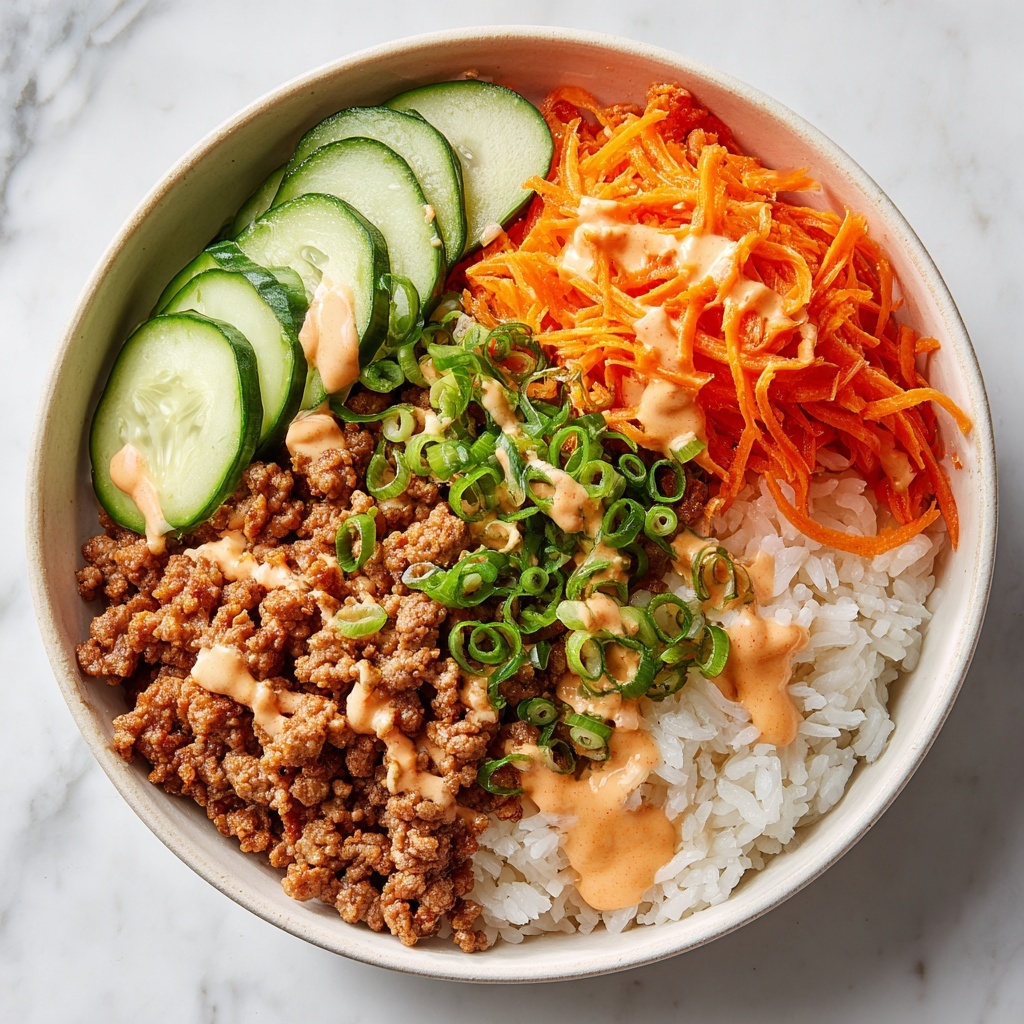
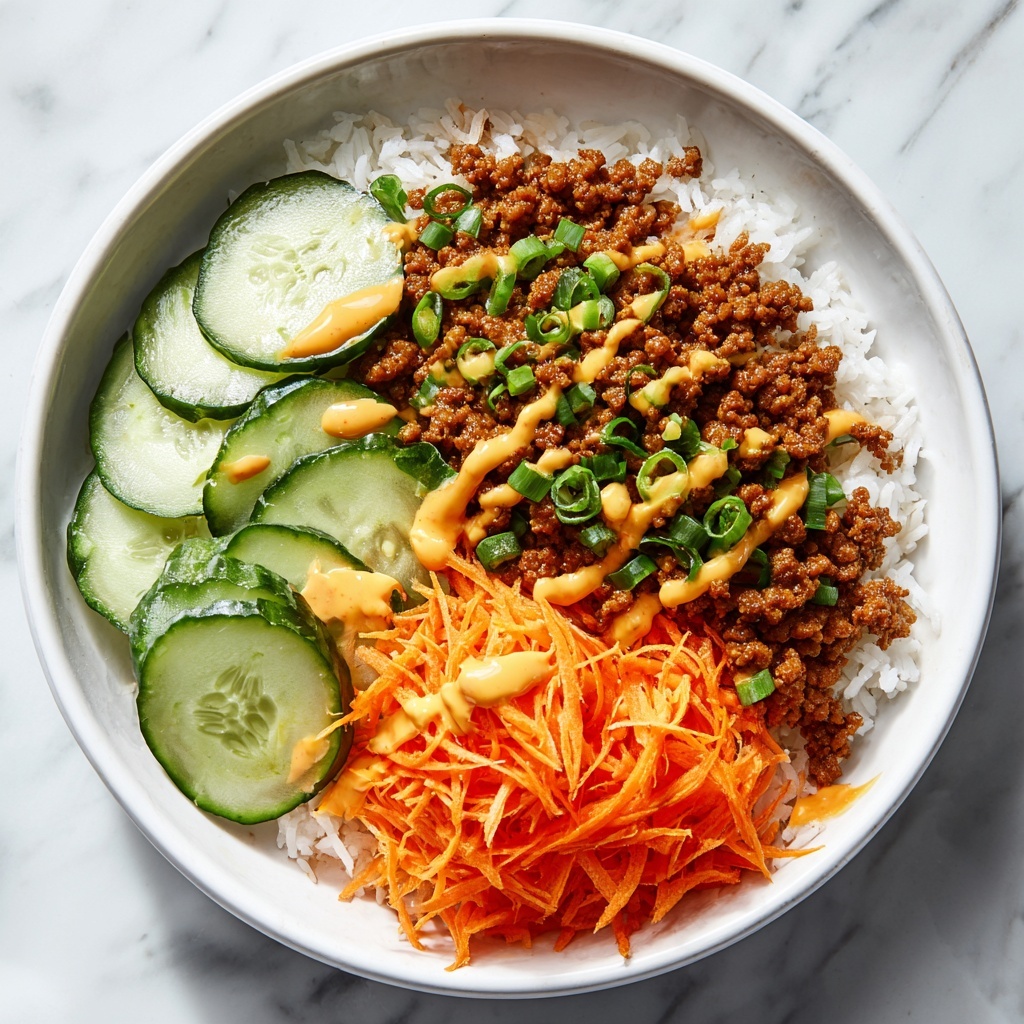
Layer warm jasmine rice in each bowl as your base. Spoon the savory beef mixture on top, then scatter the julienned carrots, cucumber slices, and kimchi alongside. Dollop with the creamy gochujang mayo and finish with a sprinkle of scallions and extra sesame seeds. Each bowl should look vibrant and inviting — it’s almost too good to eat!
How to Serve Korean Beef Rice Bowls Recipe
Garnishes
Sprinkle toasted sesame seeds and additional sliced spring onions on top for an extra pop of texture and flavor. You can also add a wedge of lime or a few fresh chili slices for a zesty or fiery kick, depending on your mood.
Side Dishes
This dish pairs wonderfully with light Korean side dishes like pickled radish, steamed edamame, or a simple seaweed salad. These sides add refreshing contrasts and keep the meal well-rounded and balanced without weighing it down.
Creative Ways to Present
For a fun twist, serve these bowls in leafy lettuce cups to make them hand-held wraps, or layer the ingredients in clear glass jars for a beautiful lunch presentation. You can also swap out the beef for chicken or tofu for variety while keeping the same incredible sauce and toppings.
Make Ahead and Storage
Storing Leftovers
Store any leftover beef and rice in an airtight container in the fridge for up to three days. Keep fresh veggies and the gochujang mayo separate to prevent sogginess and maintain their texture.
Freezing
You can freeze the cooked beef mixture without the rice and fresh veggies. Portion it into freezer-safe containers for up to one month. Thaw overnight in the fridge before reheating.
Reheating
Reheat leftovers gently in a skillet over medium heat or in the microwave until warmed through. Add fresh crunchy veggies and a dollop of mayo after reheating to bring back that fresh homemade taste.
FAQs
Can I use chicken or pork instead of beef?
Absolutely! While this Korean Beef Rice Bowls Recipe shines with ground beef’s rich flavor, ground chicken or pork work just as well and bring their own unique taste.
How spicy is this recipe?
The level of heat can be customized by adjusting the amount of gochujang. It usually has a mild to moderate spice level, but feel free to dial it up or down based on your preference.
Is this recipe gluten-free?
To make it gluten-free, substitute the soy sauce with tamari or a gluten-free soy sauce alternative. The rest of the ingredients are naturally gluten-free.
Can I prepare this recipe vegan?
You can transform this into a vegan dish by using plant-based ground meat or crumbled tofu, plus swapping the mayonnaise for a vegan version or cashew cream, and ensuring your gochujang is vegan-friendly.
What type of rice is best for this dish?
Jasmine rice is preferred for its fragrant, slightly sticky texture, but you can also use short-grain or medium-grain rice to achieve a similar effect.
Final Thoughts
This Korean Beef Rice Bowls Recipe is a perfect example of how simple ingredients, thoughtful techniques, and bold flavors come together to create something truly special. It’s comforting, colorful, and endlessly satisfying, making it one of those dishes you’ll want to keep coming back to. So grab your apron, gather your ingredients, and dive into this delicious bowl of goodness — your taste buds will thank you.
Print
Korean Beef Rice Bowls Recipe
- Prep Time: 10 minutes
- Cook Time: 10 minutes
- Total Time: 20 minutes
- Yield: 4 servings
- Category: Main Course
- Method: Stovetop
- Cuisine: Korean
Description
This Korean Beef Rice Bowls recipe is a quick and flavorful dish perfect for weeknight dinners. Ground beef is cooked with a spicy, savory sauce made from garlic, ginger, soy sauce, brown sugar, sesame oil, and gochujang, then served over jasmine rice with crunchy vegetables, tangy kimchi, and a creamy gochujang mayonnaise. Garnished with sesame seeds and scallions, this easy meal combines classic Korean flavors in a bowl for a satisfying dinner in just 20 minutes.
Ingredients
Sauce and Seasonings
- 1 tsp freshly grated garlic
- 1 tsp freshly grated ginger
- 3 tbsp all-purpose soy sauce
- 2 tbsp brown sugar
- 1 tbsp sesame oil
- 1 tbsp gochujang (adjust for spice preference)
- 1 tsp rice vinegar
- 1 tbsp sesame seeds, plus extra to garnish
Beef & Cooking
- 2 tbsp extra-virgin olive oil or neutral oil
- 500 g (1 lb 2 oz) minced (ground) beef
- 2 spring onions (scallions), finely sliced (1 tbsp reserved for garnish)
Gochujang Mayonnaise
- 3 tbsp whole-egg mayonnaise
- 1 tsp gochujang
- ½ tsp sesame oil
- ½ tsp rice vinegar
Bowl Components
- 2 cups (370 g) cooked jasmine rice
- 1 cup (240 g) kimchi
- 1 carrot, julienned
- 1 Lebanese (short) cucumber, sliced into half moons
Instructions
- Prepare the sauce: In a medium bowl, combine freshly grated garlic and ginger, soy sauce, brown sugar, sesame oil, gochujang, rice vinegar, and sesame seeds. Stir until the sugar dissolves and the mixture is well combined.
- Cook the beef: Heat the olive oil in a large skillet over medium-high heat. Add the ground beef, breaking it up with a spoon, and cook until browned and fully cooked, about 6-8 minutes.
- Add the sauce to beef: Pour the prepared sauce over the cooked beef in the skillet. Stir well to coat the beef evenly. Cook for another 2-3 minutes until the sauce thickens slightly and the beef is well flavored.
- Make the gochujang mayonnaise: In a small bowl, mix the mayonnaise with gochujang, sesame oil, and rice vinegar. Adjust the spice level to taste.
- Prepare the vegetables: Julienne the carrot and slice the cucumber into half moons. Finely slice the spring onions, reserving 1 tablespoon for garnish.
- Assemble the bowls: Divide the cooked jasmine rice evenly among four bowls. Top each with a portion of the Korean beef, kimchi, carrot, and cucumber slices.
- Add toppings: Drizzle each bowl with the gochujang mayonnaise. Garnish with reserved spring onions and extra sesame seeds for added flavor and crunch.
- Serve: Serve immediately while warm, allowing the flavors to combine beautifully in each bite.
Notes
- If you want less spice, reduce the amount of gochujang or substitute with a mild chili paste.
- Use any neutral oil like canola or vegetable oil if you prefer instead of olive oil for cooking.
- Fresh jasmine rice is best for this recipe, but any steamed white or brown rice will work.
- Kimchi adds tangy heat and crunch; substitute with pickled vegetables for a milder flavor.
- For a vegetarian version, substitute beef with crumbled tofu or tempeh and use vegetarian-friendly mayonnaise.