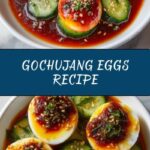
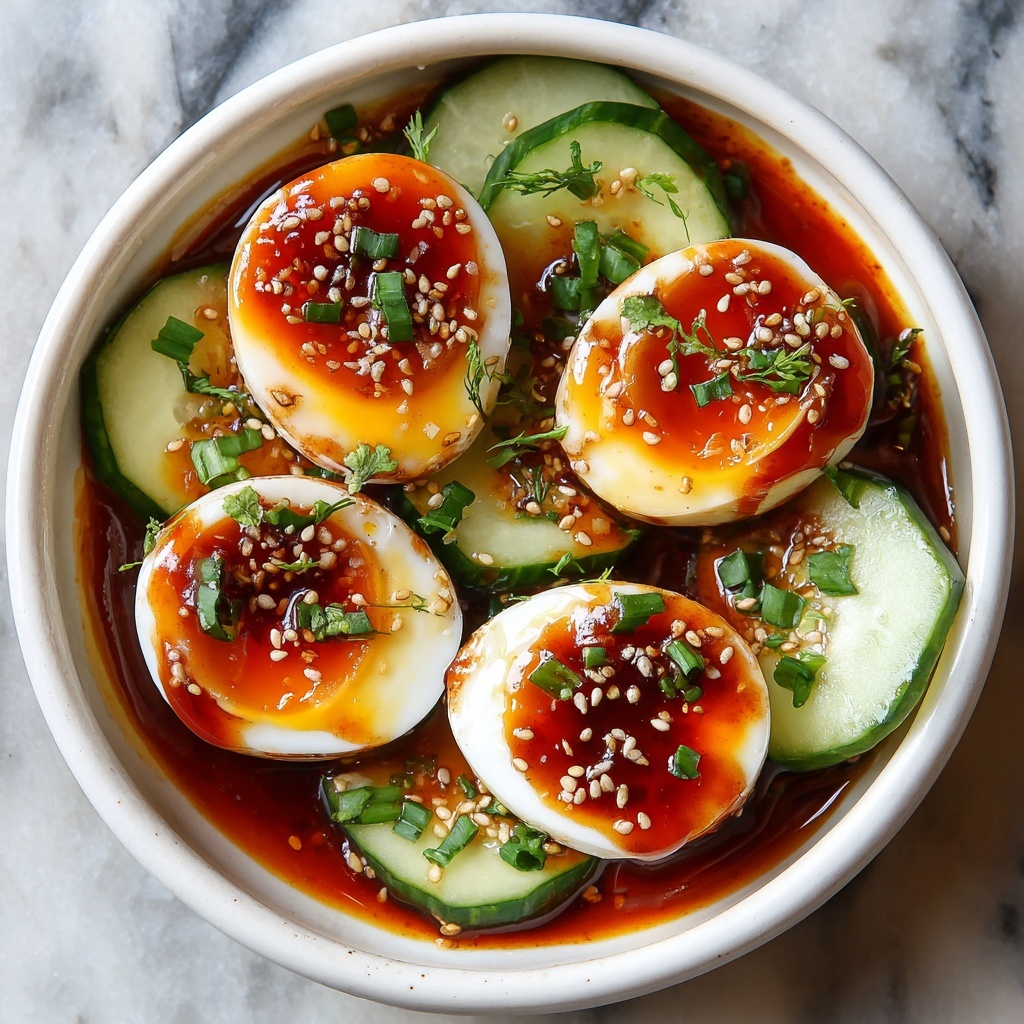
If you’re craving a burst of bold Korean flavors wrapped around a simple, comforting snack, the Gochujang Eggs Recipe is here to wow your taste buds. These perfectly boiled eggs get a luxurious coating of spicy, savory gochujang mixed with soy sauce and sesame oil, creating a dish that’s as easy as it is unforgettable. Whether you enjoy them as a quick breakfast, an impressive appetizer, or a flavorful side, these eggs bring a vibrant pop of color and spice that feels like a little celebration in every bite.
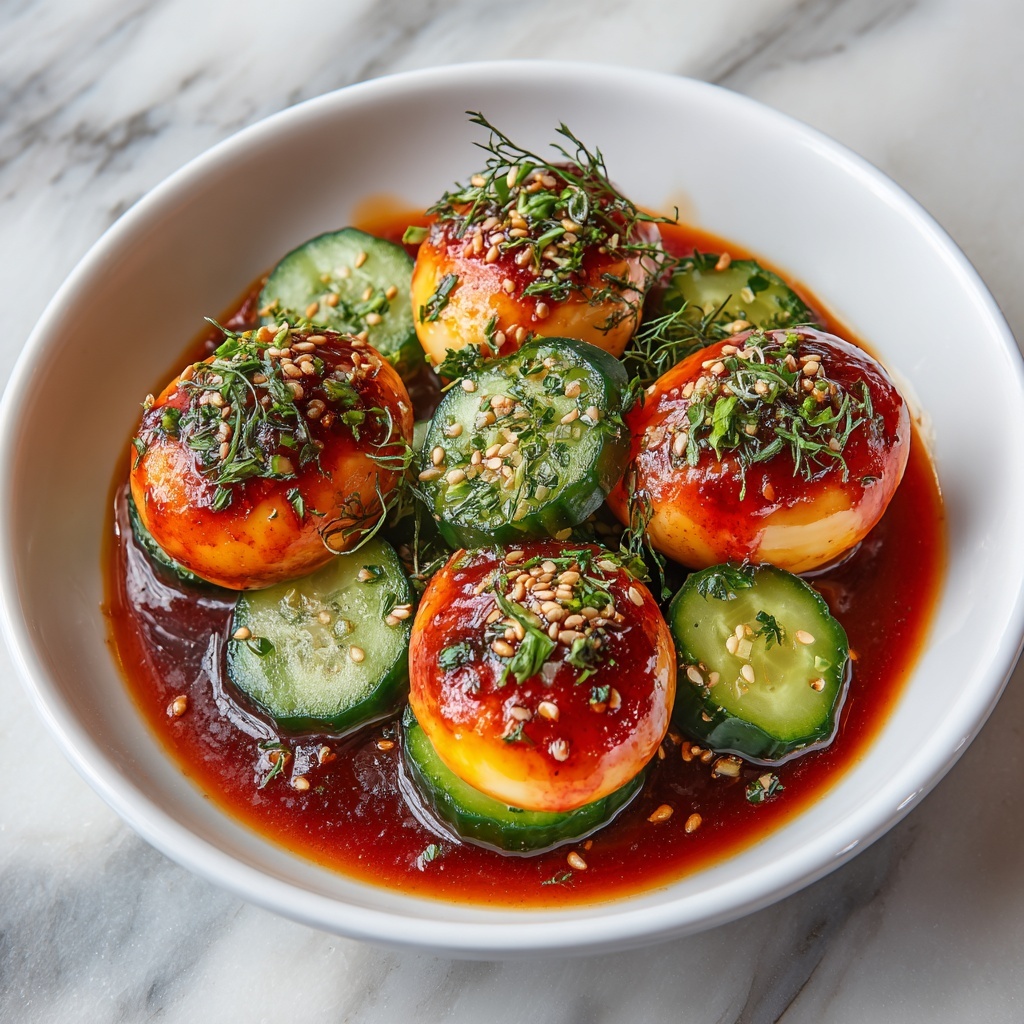
Ingredients You’ll Need
Gathering your ingredients for this Gochujang Eggs Recipe is wonderfully straightforward. Each component plays a crucial role in balancing heat, umami, and richness, giving you that signature taste and mouthwatering glaze you’ll want to savor again and again.
- Eggs (4): The stars of the show, providing a creamy, tender base once boiled and peeled.
- Gochujang (2 tablespoons): This Korean chili paste brings a perfect spicy sweetness that makes the dish unforgettable.
- Soy sauce (1 tablespoon): Adds a salty, umami depth that enhances the gochujang without overpowering it.
- Sesame oil (1 teaspoon): A drizzle of this fragrant oil adds nutty warmth and richness.
- Green onions, chopped (1 tablespoon): Fresh, crisp, and mildly pungent, they add a bright garnish that completes the dish.
How to Make Gochujang Eggs Recipe
Step 1: Boil the Eggs
Start by boiling your eggs for about 7 minutes for that perfect soft-boiled texture with a slightly custardy yolk. If you prefer hard-boiled eggs, simply extend the cooking time. The goal is to have tender whites enveloping creamy golden centers that will soak in the gochujang glaze beautifully.
Step 2: Cool the Eggs Rapidly
Once boiled, immediately transfer the eggs into a cold water bath filled with ice. This quick chilling stops the cooking process, ensuring firm whites and making them easier to peel without any frustrating sticking.
Step 3: Peel the Eggs
Gently crack and peel the eggshells off, taking care to keep the eggs intact. Smooth, clean surfaces help the flavorful gochujang mixture cling perfectly to every inch.
Step 4: Mix the Sauce
In a bowl, whisk together the gochujang, soy sauce, and sesame oil until you have a silky, vibrant sauce. This luscious blend is the magic that transforms simple eggs into a flavor-packed Korean delight.
Step 5: Coat the Eggs
Place your peeled eggs in the sauce bowl, gently rolling and tossing them until each egg is generously coated. This step infuses every bite with the spicy, savory goodness that defines this Gochujang Eggs Recipe.
Step 6: Garnish and Serve
Scatter chopped green onions over the sauced eggs, adding a fresh, colorful touch that balances the rich flavors and adds a little crunch. Now your Gochujang Eggs are ready to impress!
How to Serve Gochujang Eggs Recipe
Garnishes
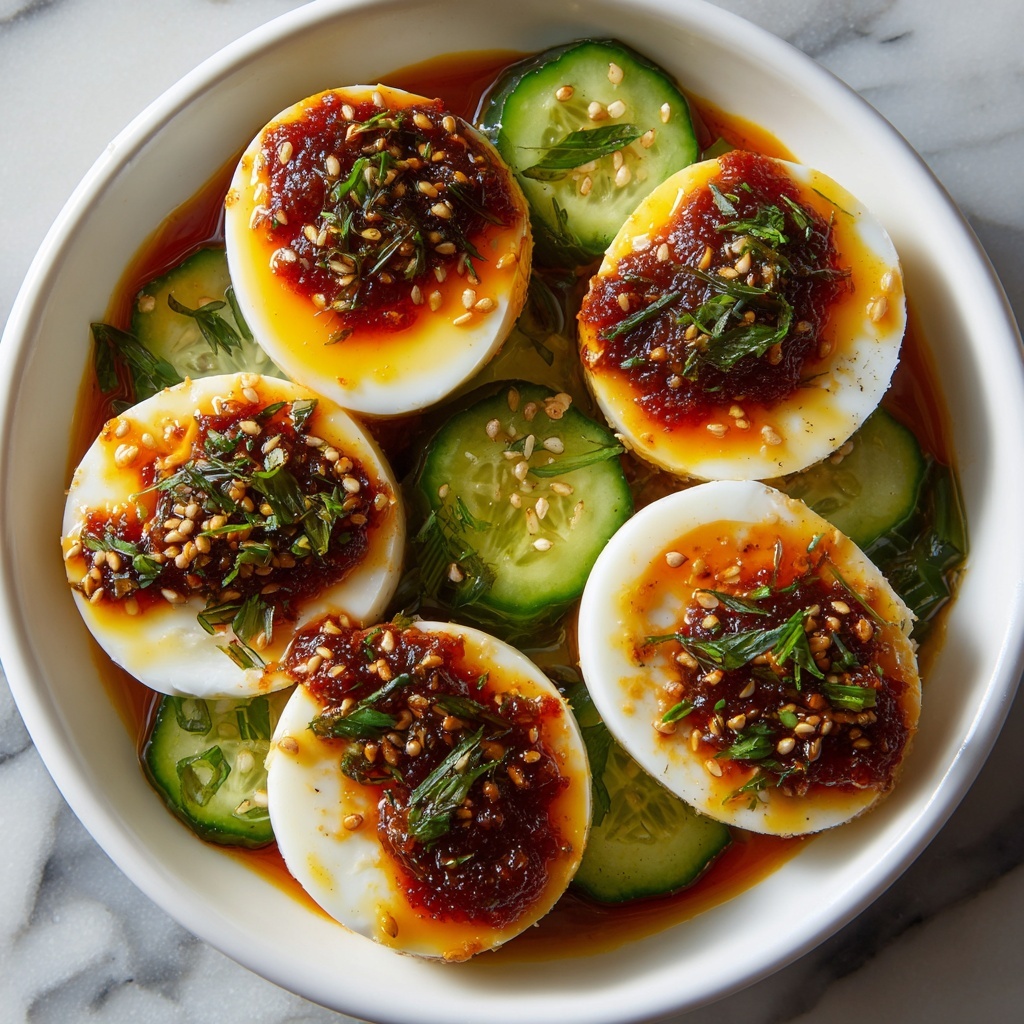
Green onions are a classic garnish, but you can also sprinkle toasted sesame seeds for crunch and a slightly smoky note. A few thin slices of fresh chili or a sprinkle of crispy fried shallots can take it up a notch for presentation and texture.
Side Dishes
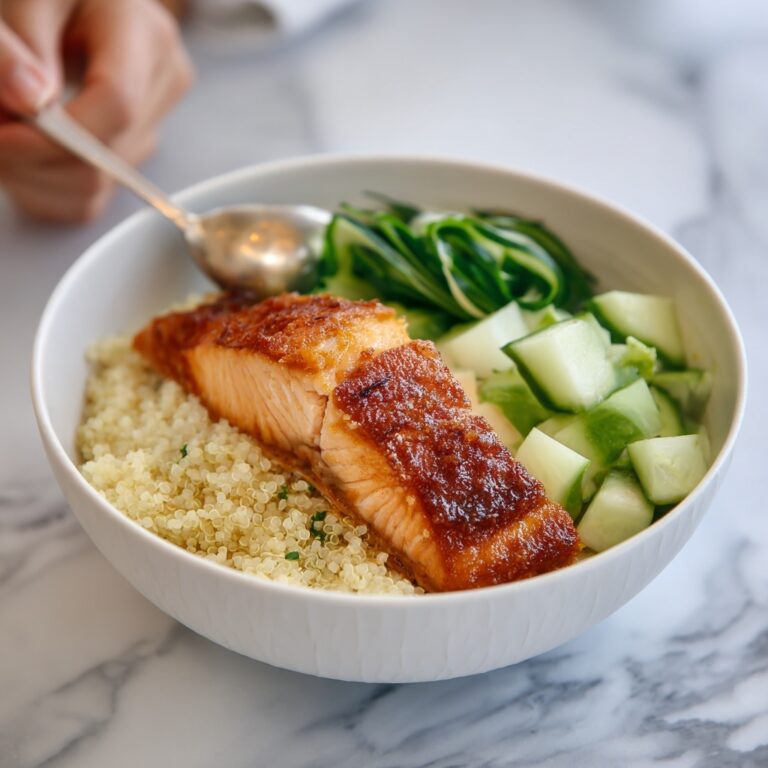
These eggs pair wonderfully with simple steamed rice for a comforting meal or alongside a crunchy cucumber salad to contrast the rich, spicy flavors. For a heartier spread, serve with kimchi or fresh lettuce leaves to wrap the eggs for a fun, hand-held experience.
Creative Ways to Present
For a party or special occasion, slice the eggs in half and arrange them on a platter, drizzling any extra sauce on top. You can also skewer the eggs whole for easy snacking or nestle them in a bowl of ramen or bibimbap for an unexpected flavor boost.
Make Ahead and Storage
Storing Leftovers
If you have leftover Gochujang Eggs, store them in an airtight container in the refrigerator. Try to consume within 2 days for the best flavor and texture since the sauce can intensify and the eggs may become firmer.
Freezing
Freezing boiled eggs isn’t usually recommended as it can alter their texture, causing the whites to become rubbery. For the best experience, enjoy this recipe fresh and avoid freezing.
Reheating
Gochujang Eggs are best enjoyed cold or at room temperature. If you prefer them warmer, gently reheat in the microwave for just 20 seconds, but be careful not to overcook and lose that delicate egg texture.
FAQs
Can I use hard-boiled eggs instead of soft-boiled?
Absolutely! Both work well, but soft-boiled eggs soak up the sauce a bit differently and offer a luscious yolk that’s extra comforting. Hard-boiled eggs provide a firmer bite and are easier to slice or skewer.
What if I don’t have gochujang on hand?
Gochujang is essential for the authentic flavor of this recipe. However, you can try a mix of chili paste with a bit of miso and sugar in a pinch, but the taste won’t be quite the same. Investing in a good jar of gochujang is worth it for this and many other dishes!
How spicy is this Gochujang Eggs Recipe?
The spice level is moderate and vibrant—not overwhelming. The sweet undertones in gochujang balance the heat, making this recipe approachable even if you’re not a huge fan of spicy food. You can adjust the amount of gochujang to suit your taste.
Can I make this recipe vegan?
Since the main ingredient is eggs, this dish isn’t vegan. However, for a similar flavor profile, you could try marinating tofu in the gochujang mixture as a plant-based alternative.
Are there any variations to this recipe?
Definitely! You can add minced garlic for extra depth, swap green onions for fresh cilantro for a different aroma, or top with a drizzle of honey to balance the spice with subtle sweetness. The simplicity of the recipe makes it a great canvas for personalization.
Final Thoughts
This Gochujang Eggs Recipe is one of those simple, vibrant dishes that quickly becomes a reliable favorite in your cooking repertoire. It’s quick to prepare, full of punchy flavor, and undeniably comforting. I encourage you to try it soon—you might find it’s the perfect answer to your next snack or light meal craving!
Print
Gochujang Eggs Recipe
- Prep Time: 5 minutes
- Cook Time: 12 minutes
- Total Time: 17 minutes
- Yield: 2 servings (2 eggs per serving)
- Category: Snack
- Method: Stovetop
- Cuisine: Korean
- Diet: Halal
Description
Gochujang Eggs are a flavorful Korean-inspired snack featuring soft or hard-boiled eggs coated in a spicy, savory marinade made from gochujang, soy sauce, and sesame oil, then garnished with fresh green onions. Perfect for a quick and protein-packed appetizer or side dish.
Ingredients
Eggs
- 4 eggs
Marinade
- 2 tablespoons gochujang (Korean chili paste)
- 1 tablespoon soy sauce
- 1 teaspoon sesame oil
Garnish
- 1 tablespoon green onions, chopped
Instructions
- Boil the Eggs: Place the eggs in a pot of boiling water and cook for about 7 minutes for soft-boiled eggs or up to 10-12 minutes for hard-boiled eggs depending on preference.
- Cool the Eggs: Prepare a bath of cold water mixed with ice cubes. Transfer the boiled eggs immediately to this ice bath to stop the cooking process and make peeling easier.
- Peel the Eggs: Once cooled, gently crack the eggshells and peel the eggs carefully. Set the peeled eggs aside.
- Mix the Marinade: In a bowl, combine gochujang, soy sauce, and sesame oil thoroughly to create a savory and spicy marinade.
- Coat the Eggs: Toss the peeled eggs in the marinade until they are evenly coated with the gochujang mixture, ensuring full flavor coverage.
- Garnish and Serve: Sprinkle chopped green onions on top of the coated eggs before serving to add a fresh and mild onion flavor.
Notes
- Adjust the boiling time to achieve your preferred yolk consistency—softer or fully hard-boiled.
- Use fresh green onions for the best garnish flavor and appearance.
- Gochujang can be spicy; modify quantity to taste or substitute with a milder chili paste if desired.
- Serve these eggs as a side dish, snack, or addition to rice bowls for added protein and flavor.
- Storing leftover coated eggs in the refrigerator overnight can help deepen the flavors.