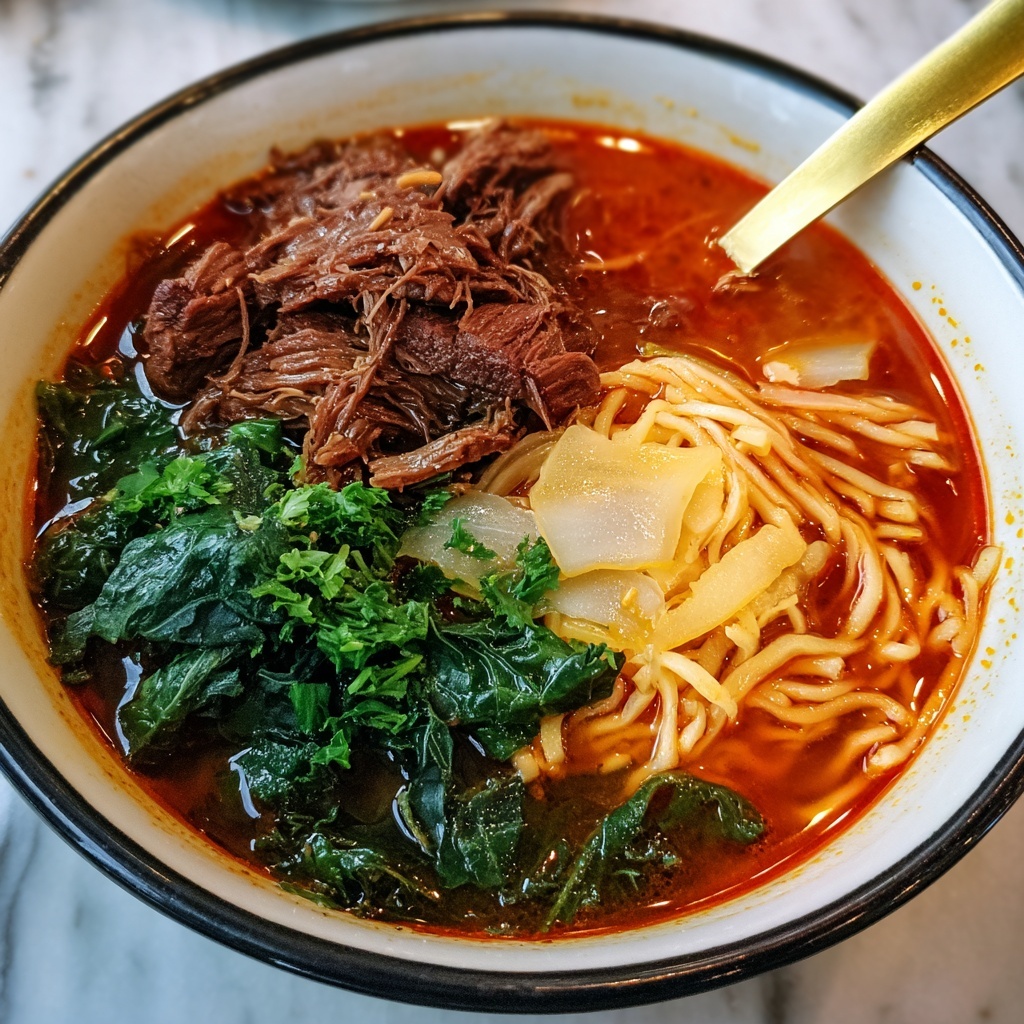
The Korean Spicy Beef Vegetable Soup Recipe is a comforting bowl of rich, spicy broth loaded with tender beef, earthy mushrooms, and vibrant, fresh vegetables. This hearty soup invites you into the warm embrace of traditional Korean flavors with every spoonful, striking just the right balance between spicy heat and savory depth. Whether you’re looking to impress guests or cozy up on a chilly evening, this recipe is a soul-satisfying dish that showcases the unique textures and tastes of Korean cooking.
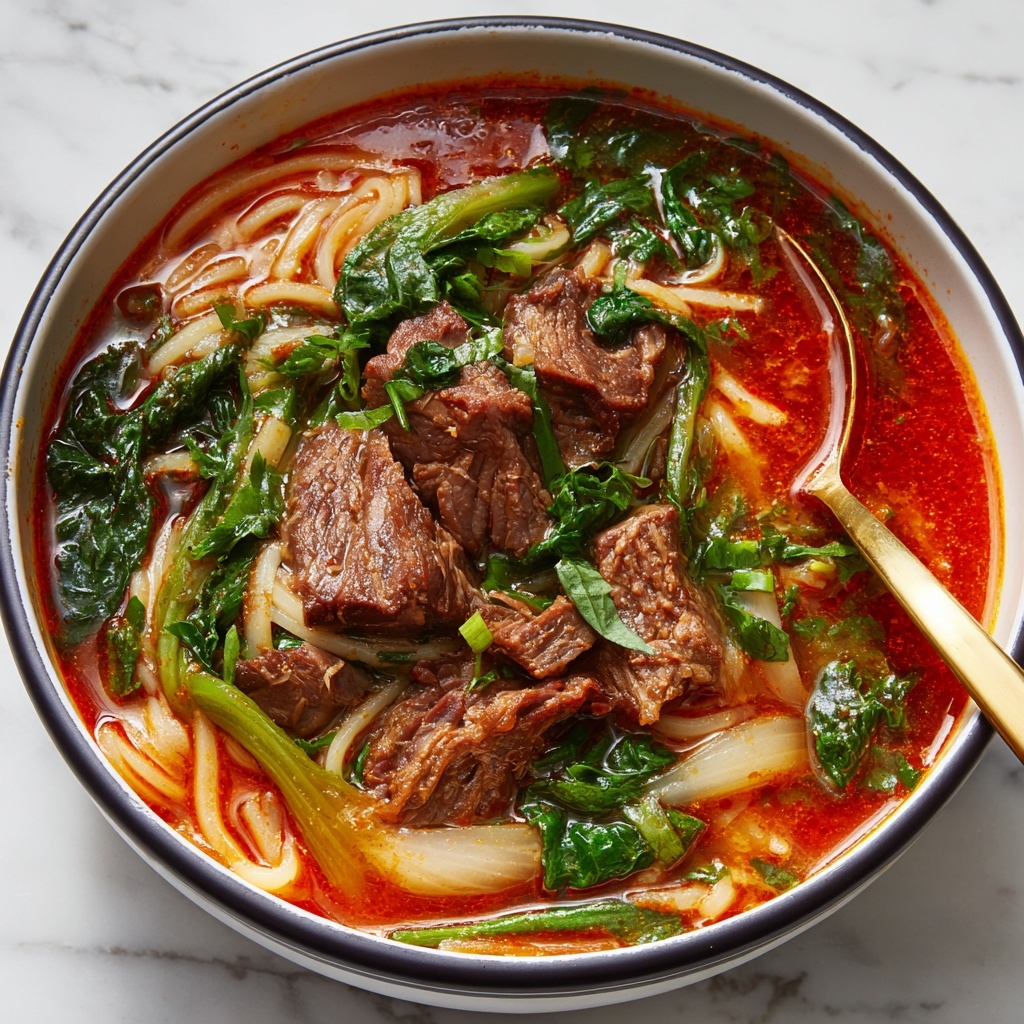
Ingredients You’ll Need
Simple yet powerful, the ingredients in this recipe come together to create a depth of flavor and a variety of textures that make every bite exciting and wholesome. Each item plays a crucial role, from providing umami and spice to balancing freshness and crunch.
- Dried fernbrake (0.8 oz / 22g): Adds a pleasantly chewy texture and earthy note after rehydration.
- Dried taro stem (1 oz / 28g, optional): Offers a subtle nutty flavor and additional chewiness that complements the soup.
- Mung bean sprouts (8 oz / 225g): Bring a fresh, crisp bite to contrast the rich broth.
- Oyster mushrooms (5 oz / 140g): Provide tender, meaty texture and a delicate umami earthiness.
- Asian leeks (2 stalks): Contribute mild oniony sweetness and freshness.
- Garlic (3 cloves, minced + 1 whole cut in half): Impart deep aromatic warmth in two different forms—minced for seasoning, whole for stock.
- Korean chili paste (gochujang, 1 tsp): Adds a spicy-sweet kick and vibrant color to the broth.
- Soy sauce (1 tbsp): Brings salty depth and savory notes.
- Korean soup soy sauce (gukganjang, 3 tbsp): A lighter soy sauce variant that enhances umami without overpowering.
- Korean anchovy sauce (1 1/2 tbsp): Delivers rich seafood umami that rounds out the broth.
- Salt and pepper: Adjust seasoning to taste for perfect balance.
- Beef brisket (1 1/4 lb / 560g): The star protein, slow-cooked for tender, flavorful chunks.
- Large onion (1, halved): Sweetens and flavors the beef stock.
- Korean radish (1/2 lb / 225g, large chunks): Adds subtle sweetness and body to the stock.
- Water (14 cups / about 3 liters): The base of the soup, crucial for simmering stock and melding flavors.
- Oil (2 tbsp) + Sesame oil (2 tbsp): Used to create aromatic chili oil that carries spice beautifully.
- Korean chili flakes (gochugaru, 3-4 tbsp): Provide smoky, moderate heat that is signature to Korean spicy dishes.
How to Make Korean Spicy Beef Vegetable Soup Recipe
Step 1: Rehydrate Dried Vegetables
Start by softening the dried fernbrake and, if using, the taro stem. Boil them separately until tender. After boiling, soak them for about an hour to fully rehydrate, then drain, rinse thoroughly, and slice them into bite-size pieces. This step restores their texture and readies them for the soup’s vibrant broth.
Step 2: Make Beef Stock
In a large stockpot, combine the beef brisket, halved onion, whole garlic, Korean radish chunks, and water. Bring to a boil, then reduce to a simmer and cook gently for 45 minutes. This slow simmer extracts maximum flavor from the beef and vegetables, yielding a rich base. Once done, remove and discard the solids, shred the beef brisket finely, and strain the stock through a fine sieve to ensure your broth is silky smooth.
Step 3: Blanch Fresh Vegetables
Prepare your fresh ingredients by trimming the Asian leeks. Quickly blanch mung bean sprouts, mushrooms, and leeks in a pot of boiling salted water for just a few seconds, then drain, rinse with cold water, and gently squeeze out excess moisture. This short blanch keeps them tender-crisp and vibrant, perfect for layering textures in your soup.
Step 4: Make Chili Oil
Warm the regular oil and sesame oil together over low heat in a pot. Add the Korean chili flakes and stir for about 30 seconds until fragrant. This chili oil is the backbone of your flavorful broth and will carry the dish’s heat and aroma beautifully without burning the spices.
Step 5: Combine and Simmer
Add all the blanched vegetables and shredded beef to the chili oil. Pour in the reserved beef stock and stir in the Korean chili paste (gochujang). Let everything simmer gently for 15 to 20 minutes, allowing the flavors to meld and deepen into a unified, tantalizing spicy soup.
Step 6: Season to Perfect Balance
Finish your Korean Spicy Beef Vegetable Soup Recipe by seasoning with soy sauce, Korean soup soy sauce, and anchovy sauce. Taste and adjust seasoning with salt and pepper as needed to balance savory, spicy, and umami notes perfectly. This final step brings the whole dish together, creating a complex and deeply satisfying bowl.
How to Serve Korean Spicy Beef Vegetable Soup Recipe
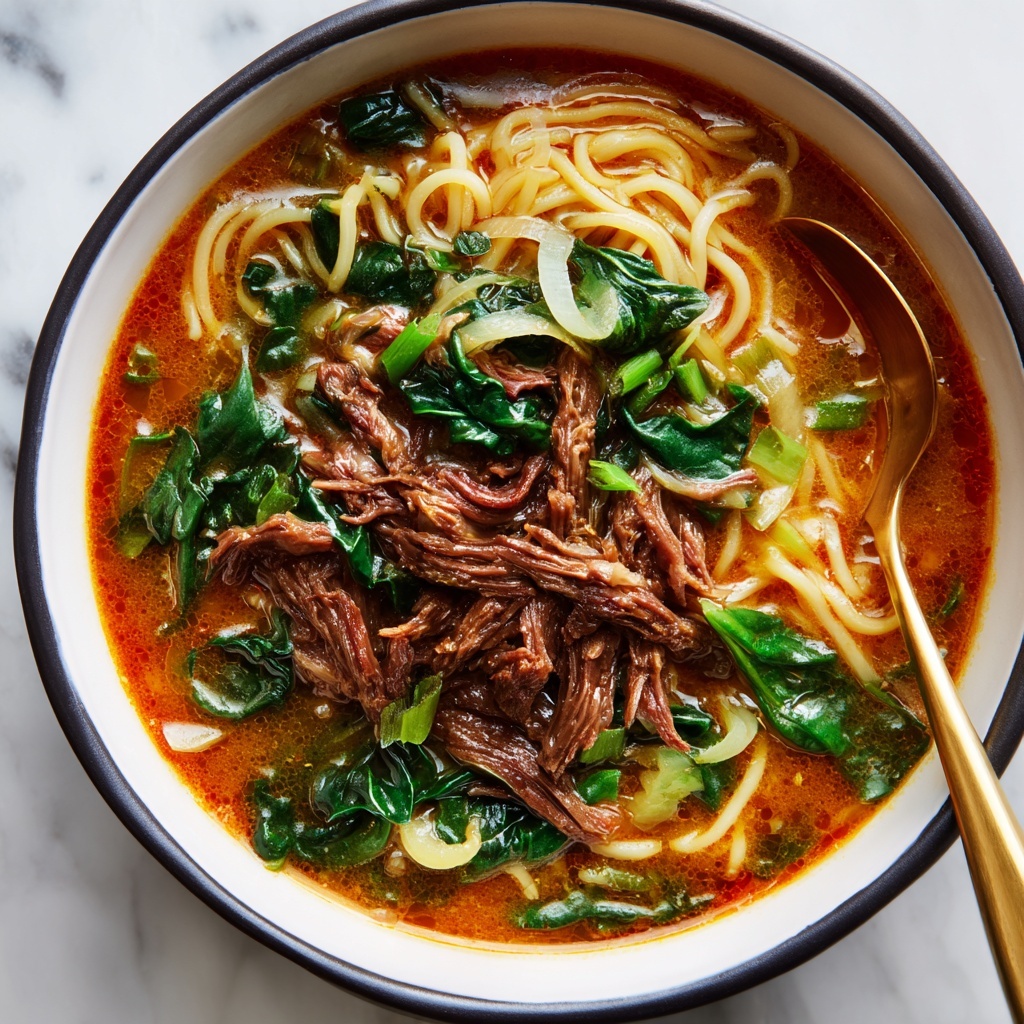
Garnishes
Fresh garnishes like thinly sliced scallions, a sprinkle of toasted sesame seeds, or even a handful of chopped fresh cilantro can brighten the spicy broth and add fresh herbaceous notes. Feel free to add a wedge of lime on the side for a citrusy pop that beautifully contrasts and elevates the soup’s richness.
Side Dishes
This soup pairs wonderfully with simple side dishes. For example, a bowl of steamed white rice to mellow the spicy heat or crisp Korean kimchi for a sharp, fermented contrast. Light pickled vegetables also complement the bold flavors and provide refreshing crunch alongside the soup.
Creative Ways to Present
For a fun family-style meal, serve the soup in a large earthenware pot so everyone can scoop their favorite bites of tender beef and veggies. Another idea is to ladle the spicy broth over cooked noodles for a hearty noodle soup variation that makes the Korean Spicy Beef Vegetable Soup Recipe even more filling and perfect for colder days.
Make Ahead and Storage
Storing Leftovers
Store any leftover soup in an airtight container in the refrigerator for up to 3 days. Keep the broth and solids together to maintain the flavors and textures without drying out the ingredients.
Freezing
This soup freezes well. Portion into freezer-safe containers and freeze for up to 2 months. When freezing, leave some headspace as the liquid will expand. Rehydrate fresh vegetables after thawing to avoid sogginess.
Reheating
Reheat gently on the stovetop over low to medium heat. Stir occasionally and add a splash of water or broth if the soup has thickened too much. Avoid boiling vigorously to preserve the delicate flavors and textures of the beef and vegetables.
FAQs
Can I use a different cut of beef for this soup?
Absolutely! While beef brisket is preferred for its tenderness and flavor after slow cooking, you can substitute with other cuts like chuck or shank, just adjust simmering time accordingly until the meat is tender.
How spicy is this Korean Spicy Beef Vegetable Soup Recipe?
The soup delivers a moderate kick from the gochugaru chili flakes and gochujang paste, but you can easily adjust the spice level to your preference by modifying those amounts or omitting one of the chili components.
Are the dried vegetables necessary?
The dried fernbrake and taro stem add authentic texture and taste to the soup, but if you can’t find them, you can omit or substitute with fresh fernbrake or other hardy leafy greens, keeping in mind the flavor profile will shift slightly.
Can this soup be made vegetarian?
To make it vegetarian, replace the beef with mushrooms and vegetable broth, and omit anchovy sauce. Increase the variety of mushrooms or add tofu for protein to keep the broth hearty and delicious.
What is the best way to serve leftovers?
Leftover soup is fantastic as is or served over rice or noodles. Adding a fresh garnish like green onions or a squeeze of fresh lemon juice helps revive the flavors nicely.
Final Thoughts
Giving the Korean Spicy Beef Vegetable Soup Recipe a try will bring a delightful mix of textures and bold flavors to your table that’s both satisfying and heartwarming. It’s a perfect dish to share with family or friends, bursting with the authentic spirit of Korean cuisine. Dive in, savor each spicy, savory spoonful, and let it quickly become a favorite comfort food in your home.
Print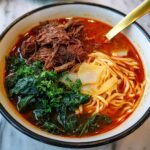
Korean Spicy Beef Vegetable Soup Recipe
- Prep Time: 20 minutes (includes soaking dried vegetables and preparing ingredients)
- Cook Time: 50 minutes (45-minute simmer for stock plus 15-20 minutes simmer with ingredients)
- Total Time: 1 hour 10 minutes
- Yield: 8 servings
- Category: Soup
- Method: Stovetop
- Cuisine: Korean
Description
Korean Spicy Beef Vegetable Soup is a hearty and flavorful dish that combines tender beef brisket, a variety of fresh and dried vegetables, and a spicy, savory broth infused with traditional Korean seasonings like gochujang and gochugaru. This soup offers a complex depth of flavors from the homemade beef stock to the chili-infused oil, making it a comforting and wholesome meal perfect for colder days or anytime a spicy, nourishing soup is desired.
Ingredients
Dried Ingredients
- 0.8 oz (22g) dried fernbrake
- 1 oz (28g) dried taro stem (optional)
Fresh Vegetables
- 8 oz (225g) mung bean sprouts
- 5 oz (140g) oyster mushrooms (or shiitake), torn into bite-size pieces
- 2 Asian leeks
- 1 large onion, cut in half
- 1 whole garlic bulb, cut in half
- 3 cloves garlic, minced
- 1/2 lb (225g) Korean radish, cut into large chunks
Meat
- 1 1/4 lb (560g) beef brisket
Liquids and Sauces
- 14 cups (about 3 liters) water
- 1 teaspoon Korean chili paste (gochujang)
- 1 tablespoon soy sauce
- 3 tablespoons Korean soup soy sauce (gukganjang)
- 1 1/2 tablespoons Korean anchovy sauce
Oils and Spices
- 2 tablespoons oil (neutral cooking oil)
- 2 tablespoons sesame oil
- 3–4 tablespoons Korean chili flakes (gochugaru)
- Salt and pepper, to taste
Instructions
- Rehydrate dried vegetables: Boil the dried fernbrake and taro stem separately until softened. After boiling, soak them in water for 1 hour. Then drain, rinse thoroughly, and slice into bite-size pieces to prepare them for cooking.
- Make beef stock: In a large stockpot, combine the beef brisket, halved onion, halved whole garlic bulb, Korean radish chunks, and 14 cups of water. Bring the mixture to a boil, then reduce the heat and let it simmer gently for 45 minutes to extract rich flavors into the broth.
- Finish beef stock preparation: After simmering, discard the cooked vegetables from the stockpot. Remove the beef brisket and shred it into bite-sized pieces. Strain the stock through a fine sieve or cheesecloth to ensure a clear broth, reserving the liquid for the soup.
- Blanch fresh vegetables: Prepare the Asian leeks by cleaning and cutting appropriately. Blanch the mung bean sprouts, oyster mushrooms, and prepared leeks in boiling salted water for just a few seconds to soften them slightly while preserving their crisp texture. Drain, rinse under cold water to stop cooking, and gently squeeze out excess water.
- Make chili oil: In a small pot over low heat, combine the neutral cooking oil and sesame oil. Add the Korean chili flakes (gochugaru) and stir continuously for about 30 seconds to infuse the oils with a vibrant spicy flavor and bright red color, being careful not to burn the chili flakes.
- Combine and simmer: Add all the prepared vegetables and shredded beef to the pot with the chili-infused oil. Pour in the reserved beef stock. Stir in the Korean chili paste (gochujang) thoroughly to integrate the heat and depth into the broth. Let the mixture simmer gently for 15-20 minutes for flavors to meld.
- Season the soup: Finally, season the soup by adding soy sauce, Korean soup soy sauce (gukganjang), and Korean anchovy sauce according to taste. Adjust salt and pepper as needed to balance the flavors perfectly. Give everything a final stir and serve hot for a delicious, spicy Korean beef vegetable soup.
Notes
- For a milder soup, reduce the amount of gochujang and gochugaru to suit your taste.
- Dried taro stem is optional but adds a traditional texture and flavor to the soup.
- Beef brisket can be substituted with other cuts suitable for slow simmering if preferred.
- Make sure to strain the stock well to get a clean and clear broth.
- Adjust the seasoning sauces carefully since soup soy sauce (gukganjang) and anchovy sauce add saltiness and umami.
- This soup is best enjoyed fresh but can be refrigerated for up to 3 days and reheated gently.